

How Many Kilometers Is Too Many on a Used Car in Langley?
The Number on the Dash
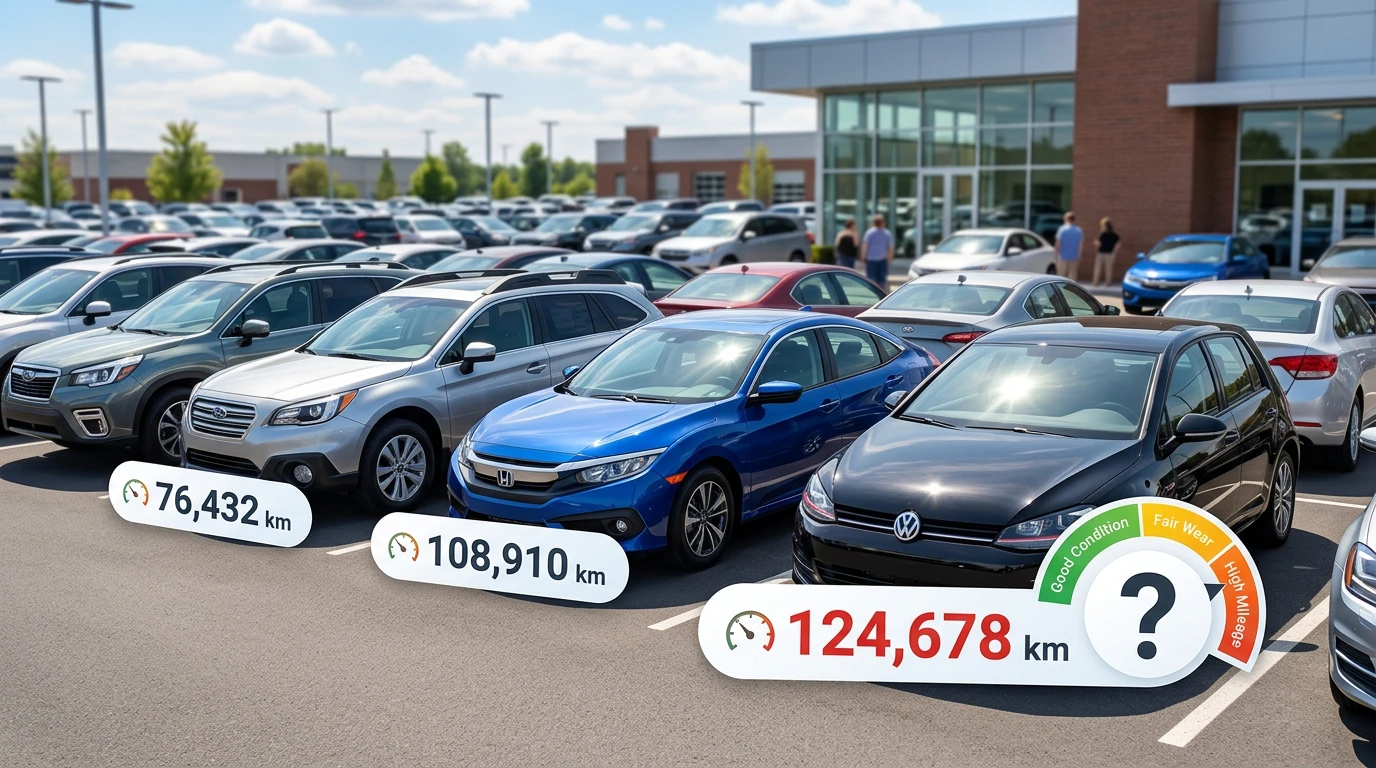
It’s a scenario every used car shopper in Langley knows well: you find the perfect pre-owned vehicle online. It has the right trim, the exact color you want, and fits your budget cleanly. But then you look at the odometer and hesitate.
Is 130,000 kilometers too many? Will it break down on your daily commute down 200th Street or along the Langley Bypass?
It is one of the most common questions we hear at Applewood Nissan Langley. For years, drivers were told to avoid any vehicle approaching the six-figure kilometer mark. But automotive engineering and powertrain longevity have evolved significantly. Here is the truth about used car mileage, and how to tell whether a car actually has "too many" kilometers for life in the Fraser Valley.
The "20,000 km" Rule of Thumb
Instead of judging the total number on the odometer in isolation, compare it to the vehicle’s age. In Canada, the average motorist drives roughly 15,000 to 20,000 kilometers per year.
To evaluate whether mileage is normal, multiply the vehicle’s age by 20,000:
- A 5-year-old vehicle with 90,000 km is right in line with expectations.
- A 3-year-old vehicle with 110,000 km was driven heavily—likely by a long-distance highway commuter.
- A 6-year-old vehicle with only 45,000 km represents exceptionally low annual usage.
Highway vs. City Kilometers
Where and how those kilometers were accumulated matters just as much as the number itself.
A vehicle that spent 100,000 km cruising at constant speeds down Highway 1 experiences far less mechanical fatigue than one subjected to 60,000 km of stop-and-go congestion along the 200th Street corridor. Constant braking, idling, gear shifts, and rough road surfaces take a much heavier toll on transmissions, suspension bushings, and brake rotors. A higher-mileage highway vehicle is often mechanically healthier than a low-mileage urban runabout.
Service History Beats the Odometer
The single most critical rule of pre-owned shopping: a well-documented vehicle with 140,000 km is a safer investment than a neglected car with 60,000 km.
Modern engines and transmissions will routinely surpass 250,000 km when fluid changes and preventative services happen on schedule. Reviewing the CARFAX report and service documentation tells you if the previous owner followed factory guidelines. Consistent oil changes, timely brake services, and scheduled fluid flushes matter infinitely more than an arbitrary odometer reading.
So, How Many Kilometers Is Actually "Too Many"?
There is no hard cutoff where a vehicle suddenly stops running. Once a car crosses the 160,000 to 200,000 km threshold, major wear components—such as alternators, water pumps,
suspension struts, and timing belts/chains—eventually need replacement. As long as the vehicle's asking price reflects that lifecycle stage and leaves room in your budget for routine upkeep, higher mileage can provide outstanding value.
The Applewood Advantage in Langley
At Applewood Nissan Langley, we remove mileage uncertainty through The All Good Experience:
- Rigorous Mechanical Inspections: Every pre-owned vehicle on our lot undergoes a thorough safety and mechanical inspection by our certified technicians before being listed for sale.
- Our Best Price Upfront: We price our inventory against real-time market data. Vehicles with higher mileage are priced down accordingly, giving you upfront transparency without haggling.
- No Hassle Exchange: If you take the car home and decide a lower-mileage model better fits your long-term plans, our exchange policy gives you total peace of mind.
Browse our fully inspected pre-owned inventory online, or visit us at Applewood Nissan Langley on Fraser Highway to test drive your next vehicle.